AFTER THIRTY-FOUR YEARS AND COUNTING
Learn About:
- National Welding Inspection School
- “CPWI”™
- Background of the “CPWI”™ Program
- John
CONTENTS
Forward
The “National Welding Inspection School
“CPWI”™
Background of the “CPWI”™ Program
John
Pipeline Program Curriculum
List of Companies attending the Program
Contact NWIS
Forward
It seems strange, after 34 years, to be preparing a booklet about something I have such strong feelings about and that is,” training for pipeline welding inspectors”. Perhaps I should have done this long ago, but my work has not really let me have much time to do so. But now, because of the rapid growth of our school, it seems to be an appropriate time to put our background and goals in writing.
This basic intent of this booklet is to present the background for starting the National Welding Inspection School (NWIS), “Why” it started it the first place, and “Where it is headed” in the future. The logic and background for certifying pipeline welding inspectors and what qualifies the National Welding Inspection School for issuing the “CPWI”TM certificate are presented herein.
After 34 years of presenting this inspector training program across the country to most of the major oil and gas companies, (refer to the list of companies who have attended our program on Section VII of this booklet), and having more than 22,000 attendees, the school continues to grow in national and global acceptance.
The school was actually started as a means to give back to others what I was privileged to be a part of for many years as discussed in this booklet. Now, in 2011, the school has received recognition beyond our imagination and we feel obligated to continue to expand the school, make it even better, and add staff to assure the school and its program continues long after we are personally not able to do so.
We strongly believe a source of formal classroom training along with “Hands-On” training for pipeline welding inspection, as discussed in this booklet, is very much needed in the oil and gas industry. The industry and the DOT have supported our school for 34 years to date and we will do our very best to continue to improve our program and merit their continued support.
It is our opinion that the World and the US will continue to need the energy fuels found deep underground and this will require a huge need for constructing and maintaining safe energy transportation systems. As a result, there will be a growing need for well qualified pipeline welding inspectors which is the exact single purpose of this school. We hope that NWIS will be a source for knowledgeable and well-trained pipeline welding inspectors for many years in the future. [ Return to Contents ]
The National Welding Inspection School
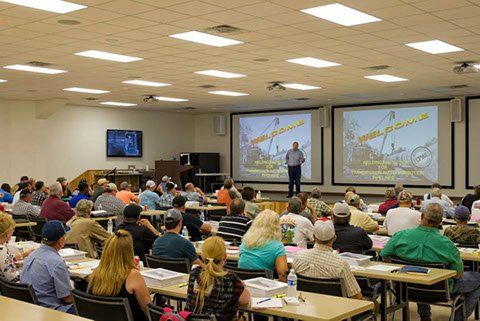
Since 1977, The National Welding Inspection School has been a specialized training program to prepare and certify individuals for a welding inspection career specifically for the construction and maintenance of plants, pipelines, stations and related facilities.
To accomplish this goal, the detailed, concentrated instruction program which leads to a Certificate for the Pipeline Welding Inspector “CPWI”™ includes the presentation of all of the industry standards and federal regulations governing pipeline construction. The latest approved codes and standards presented in detail in this program include the following:
1) API 1104, “Standard for Welding Pipelines and Related Facilities”
2) ASME B31.4, “Transmission of Liquid Pipelines”
3) ASME B31.8, Transmission of Gas Transmission and Distribution Pipelines”
4) API 5L, “Specification of Line Pipe”
5) DOT Part 192, “Minimum Safety Standards for Gas Pipelines”
6) DOT Part 195, “Minimum Safety Standards for Liquid Pipelines”
7) Other Related Codes and Standards pertaining to the visual inspection of Pipeline Welding.
Definition of “National Welding Inspection School”
“NATIONAL” - The school includes the entire Nation, i.e., from North to South (Montana to Mexico) and from East to West (New York to California). Over 400 classes have been conducted to over 22,000 attendees for the past 34 years throughout the Nation.
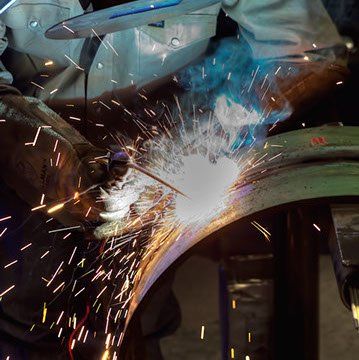
“WELDING” - The Art and Science of joining two pieces of metal (in our case, pipe) by heating the ends to above the melting temperature and adding a filler metal to assist in fusing the two pieces together to form a weld.
“INSPECTION” - The act of visually looking at the welding activity to assure all aspects of the welding are being done in strict accordance with the project specifications and requirements. This includes the qualification of welding procedures and welders, as well as, the monitoring of the actual field welding of pipelines and related facilities.
“SCHOOL” - The gathering of individuals who have a common interest in learning the fundamentals of Pipeline Welding Inspection. Since 1977, the backgrounds of the individuals have varied from welder, inspector, foremen, engineers, superintendents, and project managers to state and federal DOT inspection and auditor personnel. [ Return to Contents ]
CPWI™
Definition of Certified Pipeline Welding Inspector “CPWI”™
Since 1977, the “CPWI”™ is an individual who has completed the intense classroom training and testing governing all of the codes and standards for pipeline construction and in-service welding. The “certification” is achieved by taking and passing the 100 question examination on all of the industry and federal codes, regulations and standards. The details of each day’s curriculum are covered in Section VI of this booklet. The “Pipeline” program at present is conducted in 2 ½ days and requires the individuals to take and pass a 100 question open-book test on the codes and standards presented in the classroom to complete the program. A calculator is needed to work some of the formulas presented in the program.
The “CPWI”TM program since its inception has been offered for “Plants and Pipelines” and will continue to be offered for these unique certifications. A list of the certifications offered by the NWIS and their applications are listed.
“CPWI”TM - Certified Pipeline Welding Inspector (Transmission and Distribution Pipelines)
“CPWI”™ - Certified Plant Welding Inspector (Plant and Process Piping)
“CPWI”+™ - Same designations and class curriculum as above with the “Plus Sign” indicating the individual received the “Hands-On” inspection training in the Burton, TX facility with the tools and equipment necessary for field inspection. (Refer to the below Note).
Each of the above certification programs involves a completely different set of industry codes and standards and are shown in our website. While the “CPWI”TM designation is the same for each discipline, the laminated registration card, certificate and letter of class attendance specifies the type of certification. Each attendee passing the program receives a unique registration number traceable back to the date and location of where the attendee received the training.
Note:
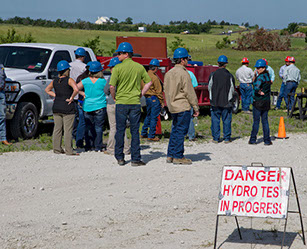
Upon completion of the new facility in Burton, in late 2012, the “CPWI”TM program will include “hands-on” training wherein the attendees will be required to learn and use all of the instruments and meters necessary for assuring that the pipe and the welding are in conformance to the project specifications. This will require an additional 1 ½ days making the program a four-day class. The successful completion of this school at the Burton, TX facility will result in the attendee receiving a “CPWI+”™ certification. The “Plus Sign” after the initials indicates the attendee has attended and passed the regular inspection class including the “Hands-On” training to distinguish the certification from the regular class which will continued to be offered around the country. [ Return to Contents ]
Background of the “CPWI”™ Program
The motivation and the beginning for this welding inspection training program goes back to John’s days as the Sr. Welding Engineer for the trans-Alaska pipeline and his daily responsibility to assess the quality of welding on the 800 mile pipeline. He was constantly traveling to each of the seven pipeline spreads working simultaneously to complete the project. Approximately 400 welding inspectors were involved in this huge effort monitoring the welding on each spread from the pipe gang to the firing line to repairs and tie-ins. The majorities of the inspectors had excellent backgrounds and were making the right calls regarding weld quality. However, some of the inspection calls indicated a few of the inspectors did not have a complete understanding of the construction specifications and national codes and used on the project. Some of the calls made were, in fact, not helpful to the inspection program. One such example occurred when John was on Spread One and he opened an electrode holding oven on the Right-of-Way. Water poured out of the bottom of the oven which was supposed to hold the low hydrogen electrodes only, (in this case E8018-C3), for welding the vertical support members (VSM’S) which support the above ground portion of the pipeline. When the foreman was questioned about this situation, his response was, “Don’t blame me John, it was your inspector that told me to put all electrodes in the oven, cellulosic and low hydrogen electrodes.” The foreman was told by his construction project superintendent to follow the welding inspector’s direction and did so against his better judgment.
Obviously, the inspector misread John’s telex of instructions for proper LH electrode storage or simply did not know the difference between cellulosic and low hydrogen electrodes. This is one example of many which John encountered during his on-site inspection visits to each spread during the two-year construction project. The net result of these occurrences was that John felt that if he ever left the safety of ARCO/Alyeska employment he would like to start a school for training welding inspectors on the codes and standards and what are the acceptable welding practices which would assure quality welding. As the project continued for two years, John found many other examples which were not helpful and even required unnecessary work such as cutting out a weld due simply to “weld spatter” not because of an actual “arc-burn”. The welding foremen throughout the project would contact John when they felt some inspector “calls” or directives were uncalled for. Not all, but some of the foremen concerns were legitimate and needed correction. This was very unfortunate and would not have happened with proper inspector training. In the “arc-burn” issue, the inspector later admitted he had never seen an actual “arc-burn” and thought the spatter was.in fact, the actual “arc-burn”. These findings, mis-calls and issues were resolved on the ROW and John never brought these to anyone’s attention back in the Anchorage office. They bothered him but he considered the issues closed and resolved although he did not forget them.
When John was asked to move to the ARCO Refinery Division in Los Angeles after five years total on the Alyeska project, and with the project complete, the above occurrences’ were motivating factors which led him to start the welding inspection training school and his consulting services business.
After leaving ARCO in 1977 John started the National Welding Inspection School and the Welding Inspector Training Program. John began teaching all of the codes and standards pertaining to pipeline construction and added his experiences on the Alyeska Pipeline. He continues to do so today along with adding his experience gained on all of the other pipeline projects he has been involved with since that big project. A certificate, a laminated card and letter of attendance were always issued to those in attendance after passing the open-book test on the course contents.
As the number of attendees continued to grow over the 34 years and as the number of companies accepting this program and its technical contents grew, it was suggested by the attending companies that the “Certificate of Attendance” be changed to “Certified Welding Inspector” to meet the needs for assuring “qualified and certified” personnel be used for monitoring their pipeline welding construction activity. Many companies have elected to use this program to meet the DOT requirements for trained and qualified personnel.
Because of the specific pipeline training program curriculum, the experience of the instructor (refer to “John” in this booklet), the longevity of the program through the years, many companies have accepted this program as a reliable and credible means to “Certify” their inspectors for assuring the quality of welding on their own pipeline welding activity.
Because of the company requests, the “CPWI”TM certification was born. The acceptance of this certificate and certification program is a company option. Most of the major companies, after reviewing the curriculum, the experience of the instructor, and the fact that the school conducts training for the DOT state and federal inspectors, consider this program an acceptable means for the training and certifying their inspectors for ”Pipeline Welding Inspection”.
Today, the National Welding Inspection School is recognized by many of the major oil and gas companies throughout the country for providing the training and certification of their individuals as a certified pipeline welding inspector “CPWI”TM..
Again, the recognition of this certification program is a company option and the school and its staff will continue to work extremely hard to merit their acceptance of this program for preparing their individuals for pipeline welding inspection activity. Adding experienced pipeline staff personnel and building a completely new facility for “Hands-On” training, in addition to the formal classroom training, is planned for 2012. The National Welding Inspection School will strive to continue to be the best school for “Pipeline Welding Inspectors”. [ Return to Contents ]
John
John received a Bachelor of Science degree in Welding Engineering from LeTourneau College, Longview, Texas in 1965. His degree required him to take all of the normal engineering courses, the welding engineering and metallurgical courses and work every other day in the LeTourneau Plant as a student welder assigned to a full time welder. While working in the plant on what was called the “alter-day” program, he worked with different welding processes in the fabrication of off-shore platforms and heavy earth-moving equipment. The processes he used as a student included the automatic and semi-automatic submerged-arc processes, the gas metal-arc process for the Army Snow Train made with various aluminum alloys and the Shielded Metal-Arc process on carbon steel materials using low hydrogen and cellulosic electrodes.
Since the school requirements and goals were to prepare the student to be able to work with his hands, as well as his mind, this degree has served him well for the past 46 years. Upon graduation John was able to do all of the welding he asked others to do as a young welding engineer, as well as, perform his research welding engineering tasks while working for ACF Industries under contract to the Atomic Energy Commission and McDonnell Aircraft in St. Louis. By 1969 John accepted a Sr. Welding Engineering position with ARCO on the Hanford Nuclear Project in Richland, WA.
At Hanford, John was responsible for preparing the welding specifications and procedures for piping and vessels for the 625 square mile nuclear reservation. John was then working on procedures and specifications for welding various alloys such as Hastelloy, Stainless Steel alloys, Inconel alloys and other materials. Working with tank fabricators, John approved the procedures and materials for constructing large underground nuclear waste storage tanks.
In 1972, at the age of 32, John was asked if he would like to be the Sr. Welding Engineer for the trans-Alaska Pipeline while still working for ARCO. Of course he accepted the position and was transferred to Houston to work on the Alyeska Pipeline team.
At Alyeska, John was given the responsibility to prepare the welding specifications and welding procedures for constructing the 48” pipeline and pumping stations. John’s responsibility included working with the contractors on the construction of the Valdez Terminal storage tanks.
John was part of the Alyeska Metallurgical Committee which consisted of the best metallurgical engineers and metallurgists from all of the Alyeska owner companies. It was from this elite group of engineers with years of worldwide metallurgical pipeline experience that John learned the fundamentals of pipeline welding and inspection. Working with this group for five years had a tremendous and permanent impact on John in terms of developing his ability to prepare welding specifications, welding procedures and troubleshooting of pipeline welding problems. This elite group which deserves mention as John’s sources of higher education on pipeline materials and pipeline welding engineering are listed below:
E.L. (Tiny) Von Rosenberg - Chief Metallurgist, Exxon Research and Engineering, Houston, TX
Harry Cotton - Chief Metallurgist, BP London
Jeff Thomas - Metallurgist, BP London
Dale Wilson - Chief Metallurgist, Mobil Oil, Dallas, TX
Jack Thomas – Chief Metallurgist, Sohio, Cleveland, OH
Rado Loncaric- Chief Metallurgist, ARCO, Plano, TX
The age of this group was anywhere from 10-15 years older than John and unfortunately all of these dedicated individuals are now gone. John is the only member of the original Alyeska Metallurgical Committee still living and he strives to continue to pass on to others what this elite team passed on to him. John feels there was no other greater educational opportunity in the country regarding pipeline welding and inspection than what he received during the five years he spent with this group. They were his mentors and his sounding board for all of the many “situations” which had to be dealt with on an immediate basis during construction of the pipeline. After each meeting of this group, they would turn to John and say “OK John you are the welding engineer, now go out to the field and implement this policy or procedure and make it work”. John treasured this opportunity to implement the work of this elite committee.
Conducting welding procedures on the 48” pipe in a Dallas cold room at -40°F. for several weeks in 1973 and later conducting full-scale welding procedure development at Prudhoe Bay, provided John the opportunity to study and learn about the various filler metals and processes, including automatic welding, in terms of the mechanical properties and the limitations and effect of each variable. Testing of the artic grade pipe and various filler metals under extreme temperature conditions provided John with a tremendous amount of knowledge which could not be duplicated under normal working conditions. The results of these tests served the basis for preparing the welding procedures for the entire Alyeska Pipeline Project.
After construction of the pipeline in 1975-76, John was sent to study at the Cranfield Institute of Technology north of London to learn how to weld on the pipeline while it was in-service in a manner acceptable to one of the owners. This provided John considerable experience in working on loaded pipelines along with gaining valuable experience from members of the Alyeska Metallurgical team.
In 1977, after five years on the Alyeska Project, John received a call from ARCO personnel in Los Angeles and was told that since the pipeline was completed and safely in operation that he was to be transferred to Los Angeles and placed in the Refinery Division. At that time, after having worked every day for five years on the pipeline, with all of the major pipeline contractors, John told the personnel manager that he did not wish to work in the Refinery Division and would like to start his own consulting business. The ARCO manager was surprised but told John if he wanted to return to the company he would be welcomed back.
After leaving ARCO, John worked many more times for ARCO in conducting welding procedures and preparing manuals for new construction and in-service welding.
From that point on in 1977, the clock moved quite rapidly. Along with teaching the “Welding Inspection School” throughout the country, pipeline contracting companies such as Reading and Bates, Michael Curran and Associates, H.C. Price Pipeline, Associated Pipeline, Sheehan Pipeline, Wilbros Pipeline, Latex Pipeline, Gregory and Cook Pipeline, Williams Pipeline and many others have hired John for various consulting tasks regarding welding engineering. John has worked on or contributed to most of the major cross-country pipelines constructed since the Alyeska Pipeline, either for the owner or the contractor.
Projects like Northern Border, Mojave Pipeline, Alliance Pipeline, Vector Pipeline, DOE Strategic Petroleum Reserve and many others are among those where John has contributed to preparing the welding specifications and/or welding procedures. Working with many owner companies and contractors over the past nearly 40 years has been a tremendous source of pride for John.
Now, at 71 years of age, John has plans to build a new “Pipeline Welding Inspection Facility” on 19 acres he and his wife Bea bought on Hwy. 290 just a few miles west of Burton, TX (about halfway between Houston and Austin). This facility will provide for “Hands-On” training using all of the equipment the inspector is expected to use during normal inspection and trouble-shooting activity. John’s plan is to build a permanent facility and staff so that the school training program will continue long after he and Bea are not able to continue. This facility will have the state-of the art welding machines and inspection equipment to properly train the inspectors for field inspection of all pipeline welding processes. Inspector training will be available on the manual, semi-automatic and automatic welding processes.
Many pipe welds from 2” through 42” will be in the shop for the attendees to inspect and judge as to their acceptance with the industry codes and standards. Measuring pipe diameters up to 42” with “PI” tapes to three decimal places to determine if there will be pipe alignment problems, measuring pipe wall thicknesses with ultrasonic thickness gages, measuring for magnetic fields which might affect the welding arc, measuring amperage and voltage with various meters and actual welding with the various processes (regardless of the outcome or appearance of their weld) will give the attendee a first-hand experience with the advantages and/or disadvantages of each process.
Conducting tensile, bend and nick-break testing necessary for welding procedure development and welder qualification will be a requirement for each attendee to perform. Preparation and measurement of the test specimens will be done by each attendee to instill confidence in their ability so they can perform these tasks in the field when asked to qualify procedures and test welders.
It is the intent of the new facility to train and prepare the attendee with the knowledge and hands-on experience necessary to deal with all of the elements of inspection he/she may be confronted with in the field. [ Return to Contents ]
Pipeline Program Curriculum
The latest editions of the following codes and standards presented in the program are listed:
API 1104, Welding of Pipelines and Related Facilities
Appendix B, API 1104, In-Service Welding
ASME B31.4, Liquid Transportation Systems for Hydrocarbons
ASME B31.8, Gas Transmission and Distribution Systems
API 5L, Specification for Line Pipe
DOT Part 192, Transportation of Natural and Other Gas by Pipeline
DOT Part 195, Transportation of Hazardous Liquids by Pipeline
Specifications for Electrodes and Filler Metals
Additional topics presented in this program include:
Preparation of Welding Procedures
Welder Qualification
Visual Welding Inspection
Pipe Inspection
Weld Joint Designs
Preheat Considerations
Electrode Selection
Weld Passes and effect on Properties
Removal of Arc Burns
Weld Repair Techniques
Weld Toughness (CVN Testing)
Weld and Heat-Affected Zone Hardness
Formulas for Welding Inspection
Weld Defects and Causes
Effect of Magnetism on Weld Quality
Measurement of Welding Parameters
First Day
The first day begins with an introduction and scope of the 2 ½ day program. Definitions of pipeline terminology and mechanical testing activities are presented. A detailed presentation of API 1104 including welding procedure development, welder qualification, visual inspection criteria and related topics are covered this first full day.
Second Day
The second day includes detailed presentations of ASME B31.4 and ASME B31.8, for Liquid and Gas Pipelines respectively. In-Service Welding is presented in depth to assure all attendees are aware of the need for safe and proper procedures when welding on loaded, pressurized pipelines. The details of Appendix B, API 1104, including the proper method for welding procedure development and welder qualification are discussed.
Note: In late 2012, the attendees will observe actual welding of split sleeves on loaded (water flowing) pipe in the new Burton Training Facility using various welding processes. Classes will be offered specifically which cover all aspects of In-Service welding with various welding processes (SMAW, GMAW and FCAW) and heat inputs for various wall thicknesses.
Also covered on this second day is the “Inspection of Pipe” using API 5L as the foundation for the acceptance criteria. Inspection items which will be covered for the welding inspector are the dimensional tolerances and the inspection tools used to determine compliance to the pipe manufacturing tolerances. The effect of magnetism on pipe ends in relation to welding of the root pass will be covered and shown on PowerPoint slides and weld cross-sections. The carbon equivalent of the pipe is discussed in the context of potential hardness and possible cracking. Preheat requirements are discussed in the event the carbon equivalent is higher than industry accepted values.
Welding electrode selection and the electrode classification system is presented this second day to provide the attendees with the reasons for selecting the electrodes and/or filler metals for the procedure which will assure the deposited weld metal strength meets or exceeds the strength requirements of the pipe material. Other properties such as impact strength (CVN testing) and the very important hardness values of the weld and HAZ are discussed for both new construction and In-Service welds.
Weld Defects and Related cross-sections are presented on the second day also to assist in learning the specific pipeline weld defects and causes for these defects.
Third Day (One-Half Day)
The class begins with each attendee turning in their completed test. The remainder of the program includes a presentation on the “Elements of Inspection”. This three hour presentation uses PowerPoint to make relevant comments on all aspects of field weld inspection, from the pipe gang through the firing line to repairs and tie-ins.
Every inspection item which has some impact on the final weld quality is addressed in this presentation. This is a very practical and important part of the program and includes pipe dimensional inspection activities including measuring for diameter and straightness compliance, measuring for magnetism on pipe ends, measuring welding parameters to assure conformance to an approved procedure, and finally, inspecting the completed weld for visual compliance to API 1104 and company requirements.
Note: In late 2012, the attendees will be required to go into the welding shop/laboratory (as part of their examination score) to conduct the measurements of pipe and conduct the inspection of welds as discussed in this booklet. This will require an additional one and one-half days making the program a four-day program.
At the completion of the program, a certificate, a laminated certification card, and letter of attendance, with a unique registration number, is issued to all attendees who have passed the exam. A score of 80% is required for passing. [ Return to Contents ]
List of Companies Attending our Program
Exxon/Mobil Co.
Kinder-Morgan Pipeline Co.
Enterprise Pipeline Co.
Energy Transfer Co.
Southern California Gas Co.
Transcontinental Gas Pipeline
Cities Service Co.
Arkansas Louisiana Gas Co.
ANR Pipeline Co.
Texas Eastern Transmission
Amoco Refinery
Questar Pipeline Co.
Delta Natural Gas Co.
Northern Liquid Fuels
Pennzoil
Southwester Gas Co.
Northern Liquids Fuels Co.
Chevron Pipeline Co.
Houston Pipeline Co.
Mississippi River Co.
Washington Gas Co.
Texas Gas Co.
Shell Pipeline Co.
Arco Pipeline Co.
Williston Basin Pipeline
Panhandle Eastern
Santa Fe Pipeline Co.
Gulf Pipeline Co.
Lone Star Gas Co.
El Paso Natural Gas Co.
Total Pipeline Co.
Columbia Gas Transmission
Delhi Gas Pipeline
Mid Continent Pipeline Co.
Florida Public Service
S. Carolina Public Service
Gulf Central Pipeline
Matador Pipeline
Buckeye Pipe Line Co.
Olympic Pipe Line Co.
Southern Natural Gas Co.
Northern Plains Natural Gas
City Of Mesa, AZ
Pugent Sound Energy
Equilon Pipeline Co.
Janx Inspection
BP America
Fortuna Energy
Centerpoint Energy
Anardarko Petroleum
Sempra Energy
Desoto Gathering Co.
Carolina Gas Transmission
Southern Pacific Pipeline Co.
Lakehead Pipeline Co.
All American Pipeline Co.
Williams Pipeline Co.
Madison Gas and Electric Co.
Trunkline Gas Co.
The Texas Pipe Line Co.
National Fuel Gas Co.
Colonial Gas Co.
Illinois Power Co.
Central Illinois Light Co.
Monterey Pipeline Co.
Consolidated-Edison Steam Co.
Seagull Energy Corp.
Amoco Pipeline Co.
Dixie Pipeline Co.
Producers Gas Co.
Louisiana Gas and Electric Co,
Atlanta Gas Light Co.
Nicor Gas Co.
Cincinnati Gas and Electric Co.
Valero Energy Co.
NuStar Energy Co.
Mountain Fuel Co.
Texaco Pipeline Co.
Central Hudson Gas and Electric Co.
Duke Energy Co.
Sohio Pipeline Co.
South Carolina Pipeline
Gulf Energy Co.
Mid-America Pipeline Co.
Coronado Transmission Co.
Plantation Pipeline Co.
Minnegasco Inc.
Sun Pipeline Co.
DOT/OPS MN, CO, TX, KS
Enogex Inc.
KN Energy
Kaneb Pipeline Co.
Great Lakes Transmission Co.
Interstate Energy
Washington Natural Gas
Colorado Springs Utilities
Chesapeake Energy
Atlas Pipeline
Tulsa Inspection Co.
Equitable Gas Co.
Southern Star Central Gas
City of Long Beach, CA
WE Energy
National Welding Inspection School
2953 FM 2679
Burton, Texas 77835
979-251-9000
Email: nationalwelding@att.net
Web Site: nationalwelding.com
“A Welding Inspection School for Plants, Pipelines and Station Construction”